
Loading...
Serving St. Joseph, MO and surrounding areas. (816) 558-9986
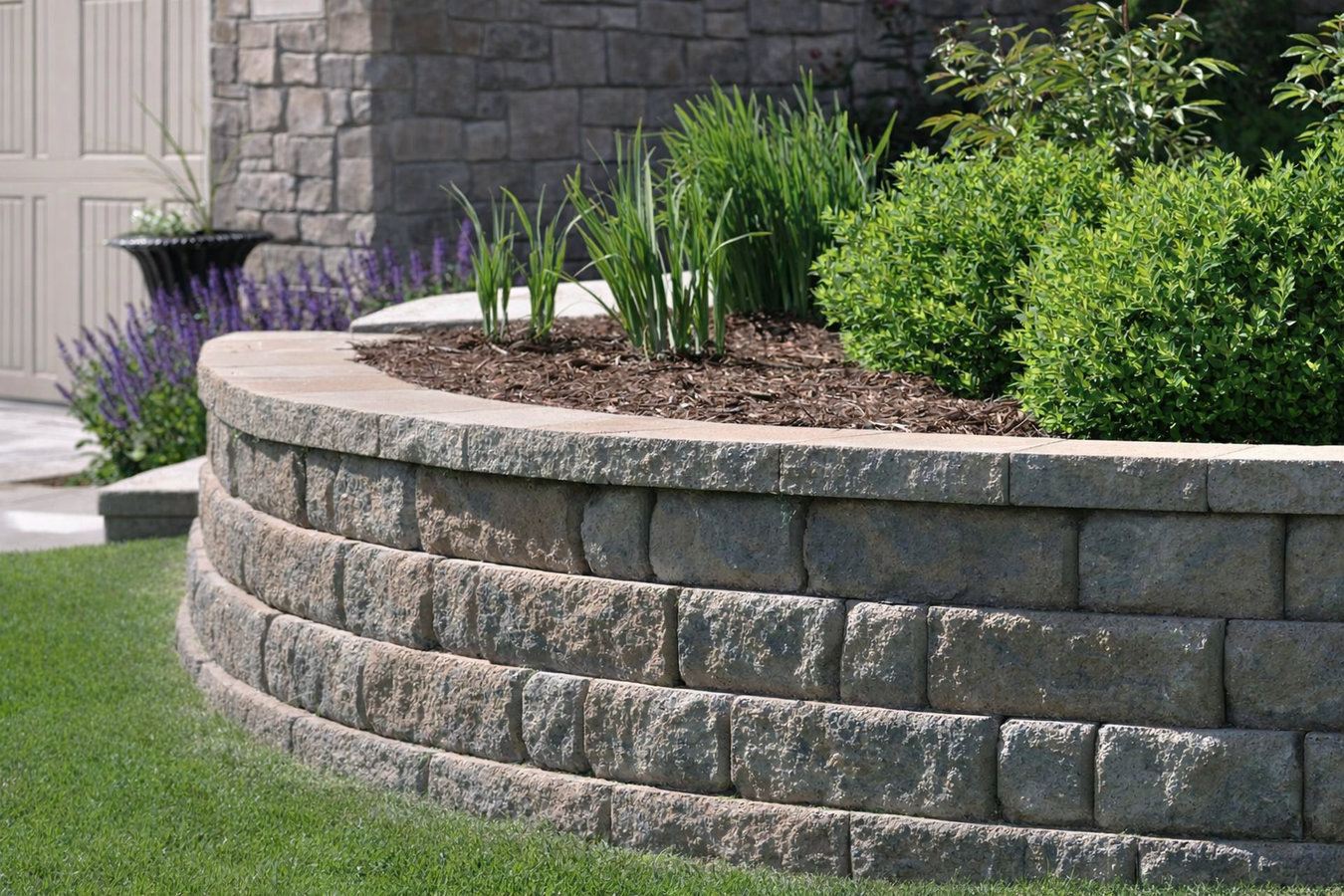
Soil washing down your slope every spring means your yard is losing ground - and if that slope sits near your foundation, the damage goes deeper than a muddy mess. We build retaining walls designed for St. Joseph's freeze-thaw winters and clay-heavy soils so the ground stays where it belongs.
Retaining wall construction in St. Joseph holds back soil on slopes and hillsides using concrete block, natural stone, or brick set over a compacted foundation and a gravel drainage layer, and most residential walls are completed in one to five days depending on length and height.
St. Joseph's rolling terrain and Missouri River bluffs mean a lot of residential lots have real grade changes - some of them steep enough that erosion is a constant problem. Without a properly built wall, that slope loses soil every time it rains and actively directs water toward whatever is downhill from it. If that happens to be your foundation, the cost of doing nothing keeps growing.
A well-built retaining wall does two things at once: it stops the soil movement, and it gives you back usable yard space that was previously too steep to maintain. Many homeowners also use a retaining wall project as the foundation for adding masonry restoration to existing structures on the same property, treating the whole yard as one cohesive project rather than a series of separate repairs.
After a heavy rain, if you notice soil, mulch, or gravel collecting at the bottom of a slope, the hillside is actively eroding. St. Joseph's clay-heavy soils can lose significant ground during the spring storm season, and once erosion starts it tends to accelerate. A retaining wall stops the movement and keeps your yard where it belongs.
If you have an older stone or block wall that is tilting forward, developing cracks, or showing gaps between sections, the drainage or foundation behind it has failed. Many St. Joseph homes have original walls from the mid-1900s that were never built with proper drainage - and those walls are now reaching the end of their life. A leaning wall will not fix itself.
When a slope near your house does not have a wall to redirect runoff, water flows toward the lowest point - often your foundation. If you see standing water against your house after rain, or if your basement gets damp during wet springs, a retaining wall uphill from the house may be part of the solution. Left unaddressed, that water causes serious foundation damage over time.
If part of your yard is so steeply sloped that you cannot mow it safely or let children play on it, a retaining wall can turn that wasted space into a flat, usable terrace. Many St. Joseph homeowners on the city's hillside neighborhoods have yards with significant grade changes that could be transformed with a well-placed wall and some fill soil.
We build new retaining walls and replace failing ones using concrete block, natural stone, or brick, depending on your site conditions, budget, and how you want the finished wall to look. Every wall we build includes proper gravel backfill and drainage to move water away from the wall before it builds up pressure - this step is not optional, it is what determines whether the wall lasts 10 years or 40. For walls over four feet tall, we handle the City of St. Joseph permit application and coordinate the required inspection. We also rebuild older walls that were installed without adequate drainage - a common situation in St. Joseph's historic neighborhoods where many original walls are now failing.
Retaining walls often go hand in hand with other masonry work on the same property. If you are adding a terraced area behind the wall, we can tie that into concrete block walls for garden borders or structural dividers. For homeowners dealing with broader yard grading or a failing older structure, we also incorporate masonry restoration so everything on the property is handled to the same standard in one project.
Best for homeowners building a wall for the first time on a slope or hillside lot that is actively eroding.
Ideal for older walls that are leaning, cracking, or lacking the drainage system that would have prevented failure.
Suited for steep lots where a series of shorter walls creates flat, usable terrace areas instead of one tall wall.
For homeowners where a slope is directing water toward the house foundation and needs to be intercepted before it causes damage.
St. Joseph was built on and around the bluffs above the Missouri River, which means many residential lots have significant grade changes. Yards on the west side of town near the bluff edges, and older neighborhoods built into hillsides, often have slopes that actively erode without a proper wall in place. If your yard backs up to a slope or you have noticed soil washing toward your foundation after rain, the local terrain is working against you. The freeze-thaw cycle adds another layer of stress - the ground contracts and expands with every temperature swing, and a wall without a deep enough base will lean or crack within a few years. Homeowners in Leavenworth face similar bluff and hillside conditions across the Missouri River, and the same foundational requirements apply.
A large share of St. Joseph's residential neighborhoods were developed in the early-to-mid 20th century, and many of those homes have original stone or brick retaining walls that are now 50 to 100 years old. These older walls were built without modern drainage systems, and they are increasingly showing signs of failure - leaning, cracking, or letting soil wash through. If your home was built before 1970 and has a retaining wall, it is worth having it evaluated before the next wet season. Homeowners in Cameron and surrounding communities with older properties deal with the same aging infrastructure, and we bring the same evaluation approach to every property we assess.
We reply within one business day and visit the site in person before giving a price - photos cannot show slope, soil type, or drainage the way a walk-through can. You get a written estimate that covers materials, labor, drainage, and cleanup so you can compare it clearly with other quotes.
If your wall will be taller than four feet, we pull the City of St. Joseph building permit before work begins - you do not handle any of that paperwork. This adds a few days to the start date but gives you documented proof that the wall was built to city standards.
We dig out the area where the wall base will sit - in Buchanan County that means going roughly 30 inches below the surface to get below the frost line. Excess soil is hauled away, and the base is leveled and compacted before the first course goes in.
We build the wall course by course, pack gravel drainage material behind it as we go, and install perforated drain pipe to move water safely away from the wall. After backfilling, we grade the surrounding area so water drains away from the wall and your yard looks intentional, not like a work site.
Free on-site estimate, no pressure. We handle permits and cleanup from start to finish.
(816) 558-9986In Buchanan County, the frost line sits around 30 inches below the surface. We set every wall base below that depth so the foundation does not shift when the ground freezes and thaws each winter. A wall built on a shallow base will lean within a few years in St. Joseph's climate - ours will not.
The number one reason retaining walls fail is water pressure building up behind them. We install gravel backfill and perforated drain pipe behind every wall we build so that water has somewhere to go. This is standard practice on every project, not an upgrade you have to request.
We manage the City of St. Joseph building permit application and coordinate the inspection for any wall that requires one. That means your wall is on record, inspected, and fully documented - which protects you if you sell the home and matters to a buyer's inspector.
The bluff terrain and clay soils in this area require experience that a general landscaper may not have. We have worked on sloped lots throughout the city and understand how local conditions - wet springs, clay expansion, steep grades near older homes - affect how a wall needs to be built. The National Concrete Masonry Association sets the standards we follow for block wall design.
Every retaining wall we build is designed specifically for the site it goes on - the soil type, the grade, the water sources, and whether a permit inspection is required. That site-specific approach is what separates a wall that holds for decades from one that starts to lean before the first winter is over.
Restore deteriorating masonry structures on the same property while the retaining wall project is underway.
Learn MoreAdd concrete block garden borders or structural dividers to the terraced area created by your retaining wall.
Learn MoreSpring rain and snowmelt move fast in this part of Missouri - schedule your free estimate now so your wall is in place before the next storm season puts your yard at risk.